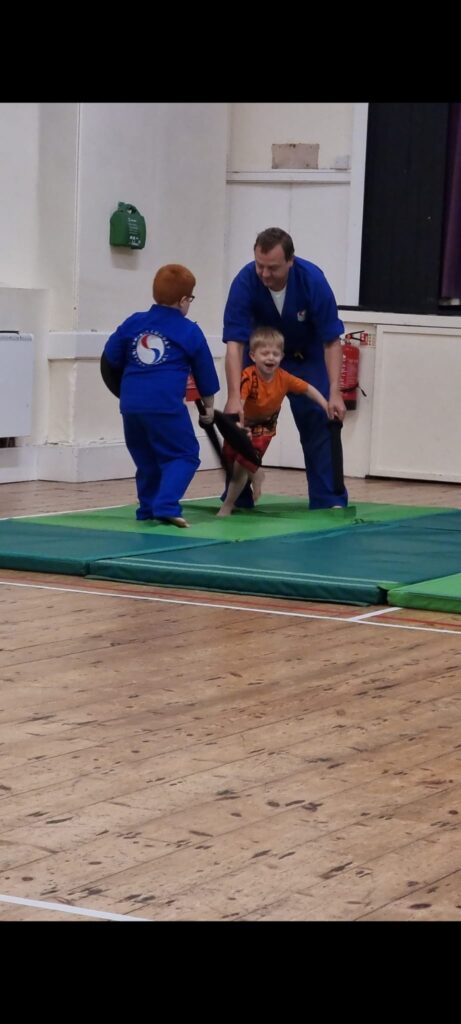
How Martial Arts Develops Leadership for Life
When parents first bring their child to martial arts, very few say:
“I want my child to become a leader.”
Adults don’t normally walk through the door saying:
“I’ve joined because I want to develop my leadership skills.”
They usually come for something more immediate.
Confidence.
Fitness.
Self-defence.
Discipline.
Making friends.
Trying something new.
But after teaching martial arts since 2005, one of the most rewarding transformations I’ve seen is what happens when someone who once needed help gradually becomes the person helping others.
It doesn’t happen after a few lessons.
It develops over months and years.
And it’s one of the reasons we see martial arts as a long-term personal development journey rather than simply a weekly activity.
Leadership Doesn’t Start With Being in Charge
When we hear the word “leader”, we often imagine the loudest person in the room.
But that’s not necessarily leadership.
Some of the best leaders I’ve seen through martial arts have been relatively quiet people.
Leadership can mean:
- Setting a good example.
- Helping someone who is struggling.
- Taking responsibility for your actions.
- Encouraging somebody else.
- Staying calm when things are difficult.
- Doing the right thing when nobody is watching.
Those qualities aren’t taught in one special “leadership lesson”.
They develop through experiences in normal martial arts training.
It Starts With Being the Person Who Needs Help
Think about someone’s first few classes.
They don’t know where to stand.
They don’t know the techniques.
They might struggle to remember what they’re supposed to be doing.
Perhaps they’re nervous about working with someone else.
So another student helps them.
“Stand here.”
“Try it this way.”
“Don’t worry, I struggled with that when I started.”
That small interaction matters.
The beginner experiences what it feels like to be supported.
Months or years later, something interesting happens.
A new beginner arrives.
Now the roles are reversed.
The student who once needed help suddenly realises:
“I know how to do this.”
And they become the person offering support.
Children Begin Taking Responsibility
For younger students, leadership begins with very small things.
Listening when instructions are being given.
Looking after their equipment.
Being ready for class.
Treating training partners properly.
Controlling their behaviour.
Trying their best.
As they progress, expectations gradually increase.
They learn that being more experienced isn’t simply about knowing more techniques.
Other students are watching them.
If they listen, others are more likely to listen.
If they encourage someone, that behaviour spreads.
If they demonstrate respect, younger or newer students begin copying it.
That’s how responsibility develops.
Not because somebody suddenly gives them a leadership title.
Because they gradually realise their actions affect other people.
The Quiet Child Can Become a Leader Too
This is particularly important.
Leadership shouldn’t mean changing someone’s personality.
A shy or quiet child doesn’t need to become loud and outgoing to become confident.
Their journey might start with simply joining in.
Later they become comfortable working with a partner.
Then they answer a question.
Eventually they might demonstrate a technique.
Months or years later, they could be helping somebody else.
Those steps may appear small from the outside.
But to the individual, they can represent enormous progress.
That’s why comparing students doesn’t work.
The real question is:
How far has this person travelled from where they started?
Teenagers Get the Opportunity to Be Positive Role Models
Teenagers are often talked about negatively.
We hear about screen time, social media, behaviour and lack of motivation.
But young people also need opportunities to be trusted.
Martial arts can provide those opportunities.
An experienced teenager may train alongside younger students.
They may help someone understand a technique.
They may demonstrate something.
They may encourage a nervous beginner.
Suddenly they’re not simply another young person being told what to do.
Someone is looking up to them.
That creates responsibility.
They begin understanding that how they behave matters.
And being trusted can help someone grow into the responsibility they’ve been given.
Adults Develop Leadership Differently
Adults experience the same journey in a different way.
An adult beginner might initially worry about looking silly.
Several months later they’re comfortable in the group.
After longer training, they’re supporting newer students.
They learn patience because not everybody understands things in the same way.
They learn communication because explaining something requires more than simply being able to do it yourself.
They learn encouragement.
They learn when to help and when to let somebody work something out.
These are skills that can transfer directly into:
- Work.
- Management.
- Parenting.
- Coaching.
- Relationships.
- Everyday life.
Again, nobody necessarily joined martial arts to learn leadership.
It developed because of the experiences they had along the way.
Helping Someone Else Makes You Better Too
There’s another interesting part of this transformation.
When students start helping other people, their own understanding often improves.
It’s one thing to perform a technique.
It’s another to understand it well enough to help somebody else.
Why does the foot go there?
Why does the movement work?
What is the other person struggling with?
How could you explain it differently?
Helping others encourages experienced students to think more deeply about what they’ve learned.
So leadership isn’t separate from martial arts development.
It becomes part of it.
Leadership Means Learning That It Isn’t Always About You
Early in someone’s martial arts journey, training is naturally about themselves.
What belt am I?
What technique am I learning?
When is my next grading?
How am I progressing?
As people mature through training, that perspective can begin to change.
They start noticing other people.
Someone is struggling.
Someone looks nervous.
Someone needs encouragement.
Someone has achieved something worth celebrating.
This is an important stage in personal development.
Success stops being only:
“Look what I achieved.”
It can also become:
“How can I help somebody else achieve?”
This Is Part of Our 9-Stage Martial Arts Journey
At SWKA, our 9-Stage Martial Arts Journey is designed around this long-term development.
Someone starts as a beginner.
They develop confidence.
They learn respect.
They build discipline and resilience.
They become part of the community.
Then the journey changes.
They begin taking responsibility.
They start helping others.
They develop leadership.
Eventually, they can become the role model that they once needed themselves.
That’s why we don’t see black belt as simply knowing enough techniques to pass an examination.
The person wearing the belt matters too.
What Does BLACK BELT Really Represent?
Within our BLACK BELT philosophy, the first few letters tell an important story:
B – Belief
Believing in yourself and your ability to grow.
L – Leadership
Using what you’ve learned to positively influence others.
A – Accountability
Taking responsibility for your choices, behaviour and development.
Those qualities are connected.
Before someone can confidently lead others, they often need to develop belief in themselves.
Then they learn that leadership brings responsibility.
It’s another reason why martial arts development takes years rather than weeks.
Imagine Who Your Child Could Become
Parents naturally think about what an activity will give their child today.
Will they enjoy it?
Will they make friends?
Will it improve their confidence?
Those are important questions.
But there’s another question worth asking:
Who could this activity help my child become over the next five years?
Imagine the nervous eight-year-old becoming the confident thirteen-year-old who notices a new child standing alone and goes over to help them.
Imagine the teenager developing enough confidence to lead by example rather than needing to follow everyone else.
Those are transformations worth investing time in.
And Adults Are Still Developing Too
Personal development doesn’t stop when we reach adulthood.
We can still become:
More confident.
More patient.
Better communicators.
More resilient.
Better leaders.
More willing to help others.
Martial arts gives adults somewhere to continue challenging themselves rather than settling into the same routines year after year.
You are never too old to become a better version of yourself.
From “Can Someone Help Me?” to “Let Me Help You”
Perhaps one of the simplest ways to describe the martial arts journey is this:
A beginner walks through the door thinking:
“I hope somebody helps me.”
Years later, that same person sees another nervous beginner and thinks:
“I can help them.”
There are hundreds of lessons, challenges, friendships, gradings and achievements between those two moments.
That’s the transformation.
And that’s why the true value of martial arts can’t be measured by what somebody learns in their first few weeks.
Where Could Your Journey Lead?
At SWKA, we welcome complete beginners and help students progress through a long-term martial arts journey at their own pace.
We offer:
- Mixed Age Kickboxing in Tavistock for ages 7+
- Children’s Spirit Combat (Aiki-Jitsu) in Bere Alston
- Adult Spirit Combat (Aiki-Jitsu) in Bere Alston
You don’t need to arrive as a leader.
You don’t need confidence.
You don’t need previous experience.
That’s the point of the journey.
Whether you’re considering martial arts for your child, your teenager, or yourself, don’t only think about what could happen during the first few lessons.
Think about who that person could become over the next few years.
The nervous beginner you bring through the door today could eventually become the person another beginner looks up to tomorrow.
If you’d like to discover where your own martial arts journey could lead, get in touch with SWKA and come along for two trial classes.