The real difference between Martial Arts and Self-defence

We often watch Martial Arts films and they always talk about using their Martial Arts skills for defence and never attack, if you go to a Martial Arts club the instructor will tell you the same thing. However, there are differences between self-defence and Martial Arts, for example most of us would have some ideas on how to try and hit someone if they attacked us, but might not always have the same impact as a Martial Artist. There will be some Martial Artists who would freeze if they were ever attacked outside a class.

The art of using your voice

When you take part in Martial Arts you are not encouraged or usually taught to use your voice when someone is attempting to attack, rob or mug you. By using a forceful tone you can sometime put an attacker of. You could use your vice to attack nearby attention by speaking loud or shouting which might scare of your attacker.

The other way to use your voice is to say things which will confuse your attacker. By saying something that will confuse your attacker it, affect their concentration and take their mind of you which might give you a few vital seconds to strike your attacker or start your get away.

You need to be able to strike an attacker

In Martial arts we teach you strikes and locks to put on an opponent, usually in the style or way you will compete in. However, when you’re on the street there are not rules and in theory anything goes, their maybe guns or knives involved depending on where you live.

The way you approach someone it class in a drill or sparring session is often very different to the way it is out on the streets. Therefore, you need to be adaptable to the situation and this is where you have the sort of anything goes. You can’t go to your attacker please come at me like this.

You need to be able to take being hit

A number of Martial Arts classes work on semi-contact or light training, some do work on full contact training. Yes getting hit can hurt a lot and repetitive hits can also hurt.

Your probably better conditioned being a Martial Artist to taking a hit, but you rarely in Martial arts get his by weapons which can hurt and cause more damage. The other issue is you won’t always be able to avoid getting hit even if you are a Martial Artist.

You need to be aware of your surroundings

When in Martial Arts training you’re not taught to be aware of your surroundings, such as choosing where to walk when, not to walk down dark allies. You don’t always learn to be aware of those around you and it’s common to bump into other class members when in a smaller space during sparring.

So as you can see there are some big differences between self-defence and Martial Arts training. On key issue I didn’t mention was that a Martial Artist could scare an attacker of with a hard fast strike which is pulled just short of contact. The strike would say to an attacker either you want to risk taking a beating or you want to get out of here. Physical Violence isn’t always needed.


Reasons why you should enrol your children into a Martial Arts Class

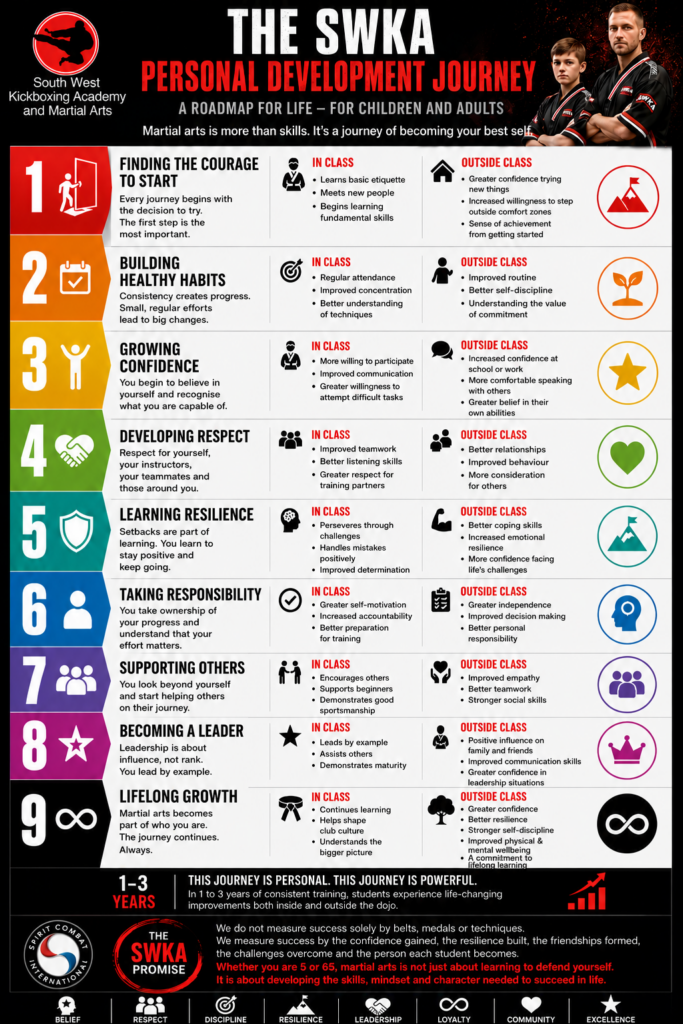
People are often advised to let or get their kids get involved with Martial Arts, and there are many of them and there isn’t a better one. Some people are afraid to let their child get involved because they may go round hitting people but it’s often found not to be the case. But there are many benefits not just those written about below.

Learn self-respect and respect for others
Learning respect for one’s self and for others is very high up on the list. We bow in Martial Arts as a mark of respect, but also to lose the negativity that is currently within us to empty it out so we can learn and become more positive.

The holding of pads for others is also a mark of learning respect, as the kid learn if they don’t hold pads for their partners, who will hold it for them properly. We also teach students to look after each other, as they will only achieve their goals and look good if their partner allows them to by following the rules, holding pads the way they should, and many more.

Motor patterns and co-ordination
Through Martial Arts we develop key motor skills, such as running, jumping, catching. These are often key to Martial Arts drills, balance improves due to kicking, as they have to stand on one leg a lot. Their co-ordination improves as they learn to target and control their kicks and punches to hit specific targets.

Learn how to overcome difficult situations
When a child struggles with a drill they begin to learn in Martial Arts that practice is the thing that makes it happen. Repetition helps kids improve, by doing activities again and again they begin to see improvements, and learn that they will improve and they will see others improve around themselves. With things like jumping higher, kicking higher, not always getting thrown over, or by making an escape when they usually get court.

Improved flexibility
Flexibility and stretching is a key aspect of any Martial Art, but it is something that is often neglected in other sports. So by encouraging your child to participate in Martial Arts you can help them remain flexible and supple. This can help reduce the risk of overuse injuries and growing pains in children in adolescence often brought on my bones growing quicker than muscle lengthen resulting it tightness and pain in areas of the body. However, being very flexible you can help reduce the tightness in muscles that can occur.

Achievement
As Martial Arts coaches/instructors, we always look to praise students; from noting how much higher they are jumping or kicking to awarding a new grade and then setting a new goal. Kids love the achievement of passing their grading’s, and seeing new belts, trying to catch up to their friends levels and that of their instructors.

Self-defence
Often those who take part in Martial Arts are less likely to be bullied. You develop an ora around you which no one’s see’s but for some reason people stay out of your way when they want to pick on someone. Maybe it’s because their afraid of what the Martial Artist could do to them.

Those who learn Martial Arts learn to look after themselves, sometimes their taught the ways how not to get into a situation where they are attacked, but if someone tried to take your child, would you rather they knew some skills on how to escape better, than not knowing what to do at all?

Making friends
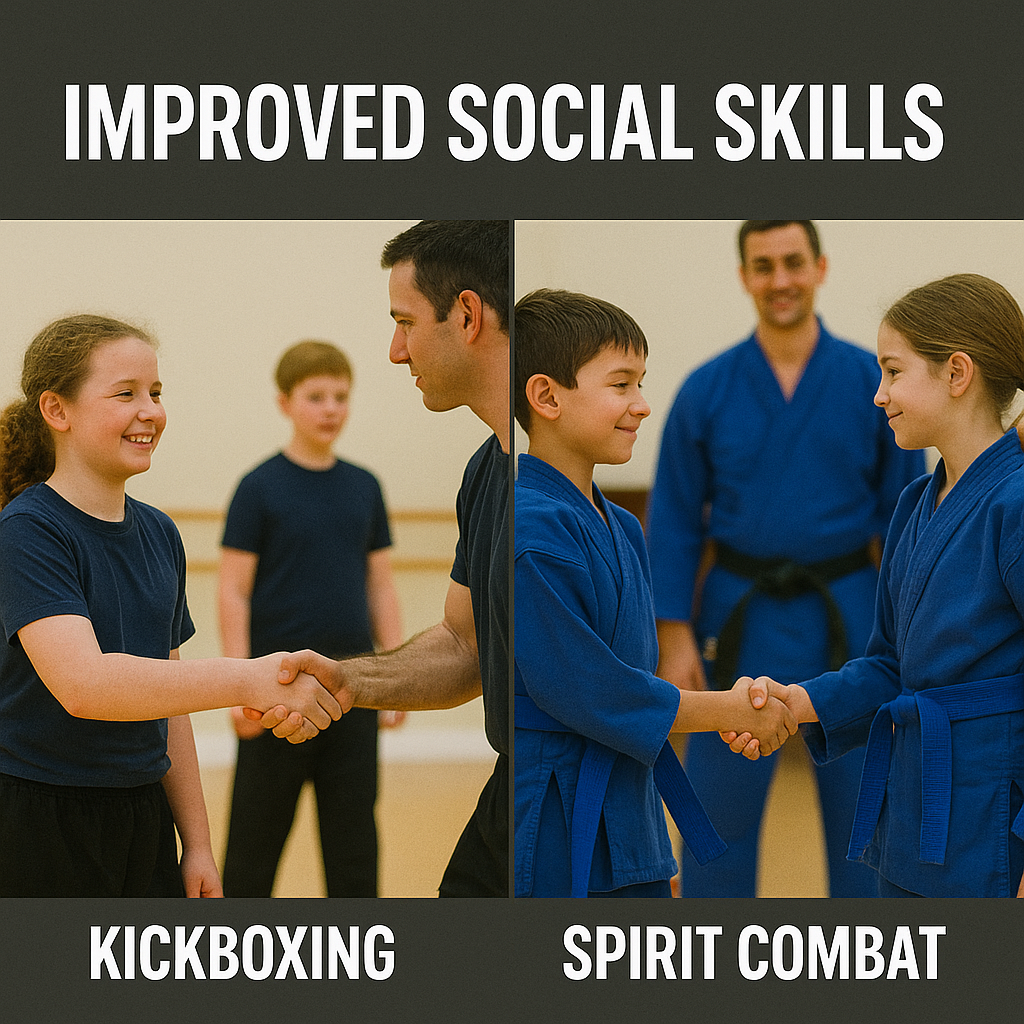
The kids and any person who starts Martial Arts, makes friends, most clubs are like a big family, and everyone looks after each other. If you don’t know one will hold pads for you, no one will want to spar with you. In Martial Arts you meet new people outside your club or school or in competitions and you build lifelong friendships.

Concentration
In order to perform tasks in Martial Arts, to kick high, compete in the ring, pass a grading, allow someone to hit pads you need to concentrate. If you’re not concentrating there is a great chance you might fall over, hurt your partner. When you don’t concentrate you miss instructions and could look silly, so gradually the concentration improves because they understand the task you setting has a goal or rewards and if they don’t achieve they don’t achieve their goal or reward, such as passing a grading, or being able to try a new move or play a particular game.

Balance
When kids or any adult to be fair comes to take part in Martial Arts balance is always something that is about poor. However, when you consider performing any non-jumping kick, to spar well you need to and end up spending lots of time on one leg. Also the higher you want to be able to kick; a key aspect is being able to transfer your body weight without falling over.

Courage
Some of the biggest challenges a child will find in Martial Arts is coming through the door and joining in the first few times. Also before grading’s can also get a bit stressful, but through training, seeing improvements and having fun this all disappears very quickly. I don’t think I’ve ever met a Martial Arts student no matte their level who wasn’t nervous walking through the door and joining in not matter whether they are a beginner or a black belt, it’s always that step into the unknown,  but as we all know it I usually no that bad.

Leadership
Leadership is something which develops do to kids bringing their friends and looking after them in class. It comes naturally as they will want to look after their friends or family members and ensure they perform well. So they naturally start teaching and ensuring their friend/family member gets all the help, support and advice they need and ensure they fit in well.

These are not all the benefits but just a few which your child could benefit from if you enrol them into a Martial Arts programme. Your probably thinking now why have we not done it sooner? Also the other question is which are is best for my child, to that there is no answer just one that they enjoy is the only answer anyone can give you.

Competition Advice

Since it’s come round to another fight day, I thought I would pen down some great tips, on how to be successful when competing in a Kickboxing bout. I help referee and judge at national events, and have been doing this for a few years and I help with K1, Semi contact, semi-heavy and full contact kickboxing. These are in no particular order.

* Don’t stand still, might seem a bit of common sense but it is common for people when they don’t have any ring experience to fade under the spotlight of an event and not perform. Standing there makes your opponent’s live easier as you’re an easier target.
* Don’t always back down in a straight line, simple reason is this makes it easier for your opponent to unload back on to you. You will know from training that as soon as you finish blocking you want to hit back directly where the blows came from. If you have taken a few steps back at an angle you won’t be where you opponent things you will be or are, which gives you a little breather but also, it can open your opponent up for you to strike when they’re not expecting it.

* Use the ring space, only engage your opponent or let them engage you when you’re ready to strike or take contact. This is about controlling your opponent. Putting space between you and your opponent, a few steps so you’re not in easy striking reach, allows you to quickly think and get your breath back. You see professional boxers doing it all the time, they are saying what worked well, didn’t anything I can capitalise or weakness I spotted, which I will capitalise on when I engage my opponent again. This will annoy your opponent and they will lose concentration and therefore, tire and become easier to fight.

* Don’t throw one strike and then step back. There’s no point throwing one hit and trying to celebrate it. The first 1-2 strikes of any combination you throw at an opponent is meant to be ensuring that you are in striking distance and testing their guard the 3-5 hit before you get out are meant to make scoring contact. As I’d hope your opponent is too busy blocking strikes 1-2 that they are not ready to defend strikes 3-5.

* Don’t drop your guard. Hands and forearms are meant to protect your head and rib cage, stomach and lower you can use your legs to block. If you lower your hands to protect your stomach, then you leave your head exposed and an experience or quick fighter will soon be capitalising on this. Remember your head contains your brain. It’s like a computer, it gets hit and doesn’t always work properly for a short period of time whilst it sorts it’s self out. Which could spell the end of your fight, as it will slow down your reaction time, and next few quick blows, could result in you being knocked out, as your concentration has been impaired.

* Make sure you know the rules, what is legal and what is not. I once stupidly decided to compete when I left my organisation to set up on my own. I went to the ISKA World Championship qualifiers in Birmingham. I’d never competed before and had no corner team. I didn’t know the rules and went in and fought a number of lads who competed at least once a month. Not knowing the rule’s did not help my performance but it defiantly helps knowing what will score you points and what will get you a warning.

* When an opponent is striking you, try and turn the attack onto them, this will annoy your opponent. It will take their mind of striking you and into blocking. This can be tricky depending on how you’re being attacked, but it will break their confidence, as they won’t like not being able to score points against you.

There are many more points I could add to this blog and I will probably add to it in the future, but I hope it helps you with your fights, and helps you win a few more bouts.